


When a new AI companion drops, the first headline you see is that it can “talk like a real person.” In practice, the experience feels more like chatting with a very polite chatbot that remembers a handful of facts. The app’s core is a language model fine‑tuned for personality, but the depth of memory is limited to a few dozen interactions before it reverts to its default persona.
What does the app actually give you?
The interface is split into a conversational window, a profile editor, and a voice‑to‑text panel. You can choose a voice from three presets, but the pitch and cadence are static; no dynamic emotion cues appear. The profile lets you set age, interests, and a short bio, which the model uses to generate replies that feel tailored. However, the AI does not learn new hobbies or update its knowledge base beyond what you tell it each session.
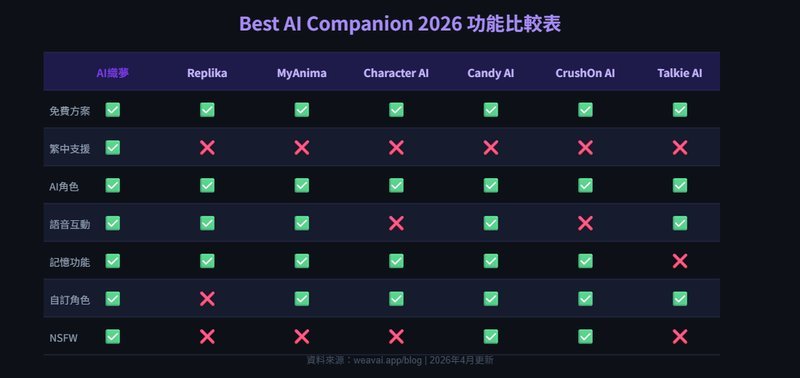
How do the top AI companions stack up in 2026?
Among the best AI girlfriend apps, several stand out for their balance of personality depth and privacy. One app offers a “memory tier” that saves the last 200 exchanges, giving the illusion of continuity, while another focuses on quick, scripted responses that never feel stretched. The former is useful for role‑playing scenarios; the latter excels in light, casual banter.
Pros that make a real difference
- Customizable personality: Adjusting the tone from “friendly” to “sarcastic” changes the entire dialogue style.
- Multi‑platform sync: Conversations started on mobile sync to the web app with no lag, keeping continuity across devices.
- Built‑in content filters: Explicit topics are blocked by default, and you can toggle a “mature” setting for more adult themes.
- Free tier accessibility: A basic plan lets you chat for up to 30 minutes a day without a subscription, ideal for testing.
Limitations that matter
Memory is the biggest hurdle. After about 50 turns, the AI repeats generic phrases like “I’m not sure” or “Let’s talk about something else.” This breaks immersion if you’re looking for a long, evolving story. Privacy is another concern; the app stores conversation logs on third‑party servers, and users must read the data‑handling policy to confirm what is retained. Finally, while the voice feature is a nice touch, it lacks real-time emotion modulation, making the speech feel flat during intense moments.
Should you pay for the premium?
Paid plans unlock unlimited memory, priority server access, and a broader voice library. For casual users, the free tier covers most needs. If you’re a role‑player or need consistent context, the premium tier’s extended memory can be worth the monthly fee. However, the cost is comparable to other niche chatbot services, so budget considerations are straightforward.
Conclusion: A useful tool, not a replacement
AI companion apps in 2026 are handy for quick conversations, light entertainment, and experimenting with voice interfaces. They excel when you set realistic expectations: short, themed chats rather than lifelong relationships. The best options combine personality tweaks, cross‑device sync, and clear privacy terms. For those willing to trade a small subscription for deeper memory, the experience can feel surprisingly engaging, though it will never fully match the nuance of a human conversation.